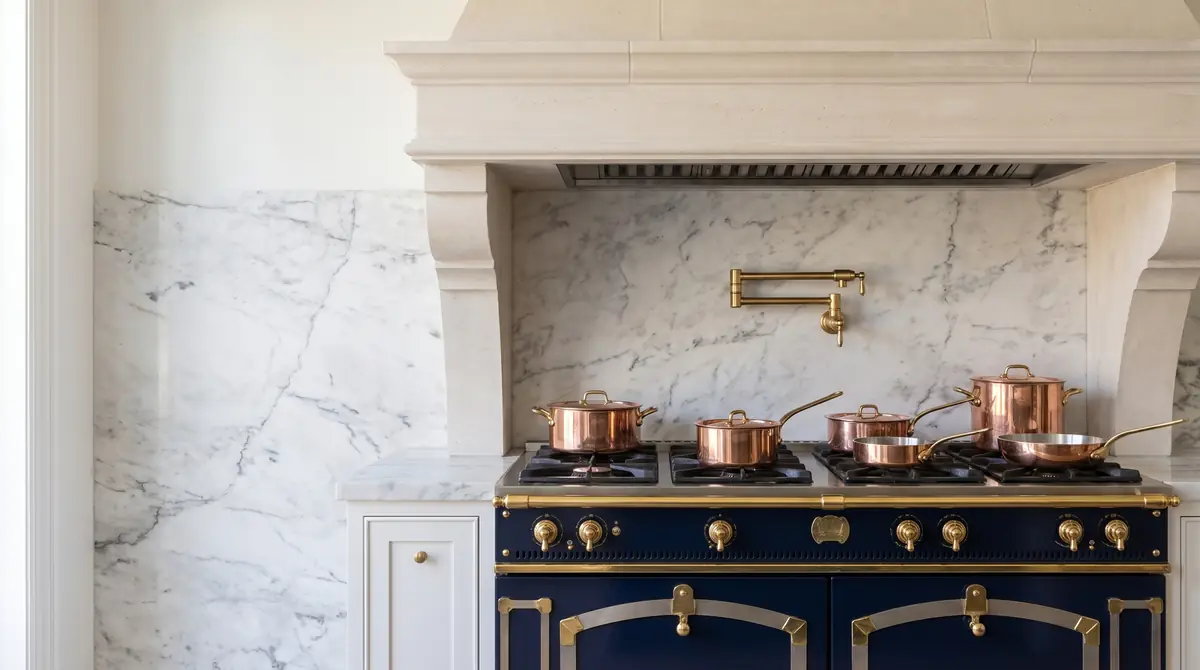
Your La Cornue is the centerpiece of the kitchen, and La Cornue repair in Pinellas County calls for patience and a light touch. If yours is a Château, it was built to order with the rangetop and ovens you chose. When a burner will not catch or an oven stops reaching temperature, you want it fixed by someone who treats it with the same care that went into making it.
Hearing "we don't work on that brand" is frustrating when guests are already on the calendar. We repair La Cornue ranges in homes across Pinellas County, explain what we find in plain language, and give you the repair price before any work begins.
Schedule Service (opens in a new tab)
The La Cornue Ranges We Repair
La Cornue traces its beginnings to Paris in 1908, and today it builds two families of ranges. We repair both.
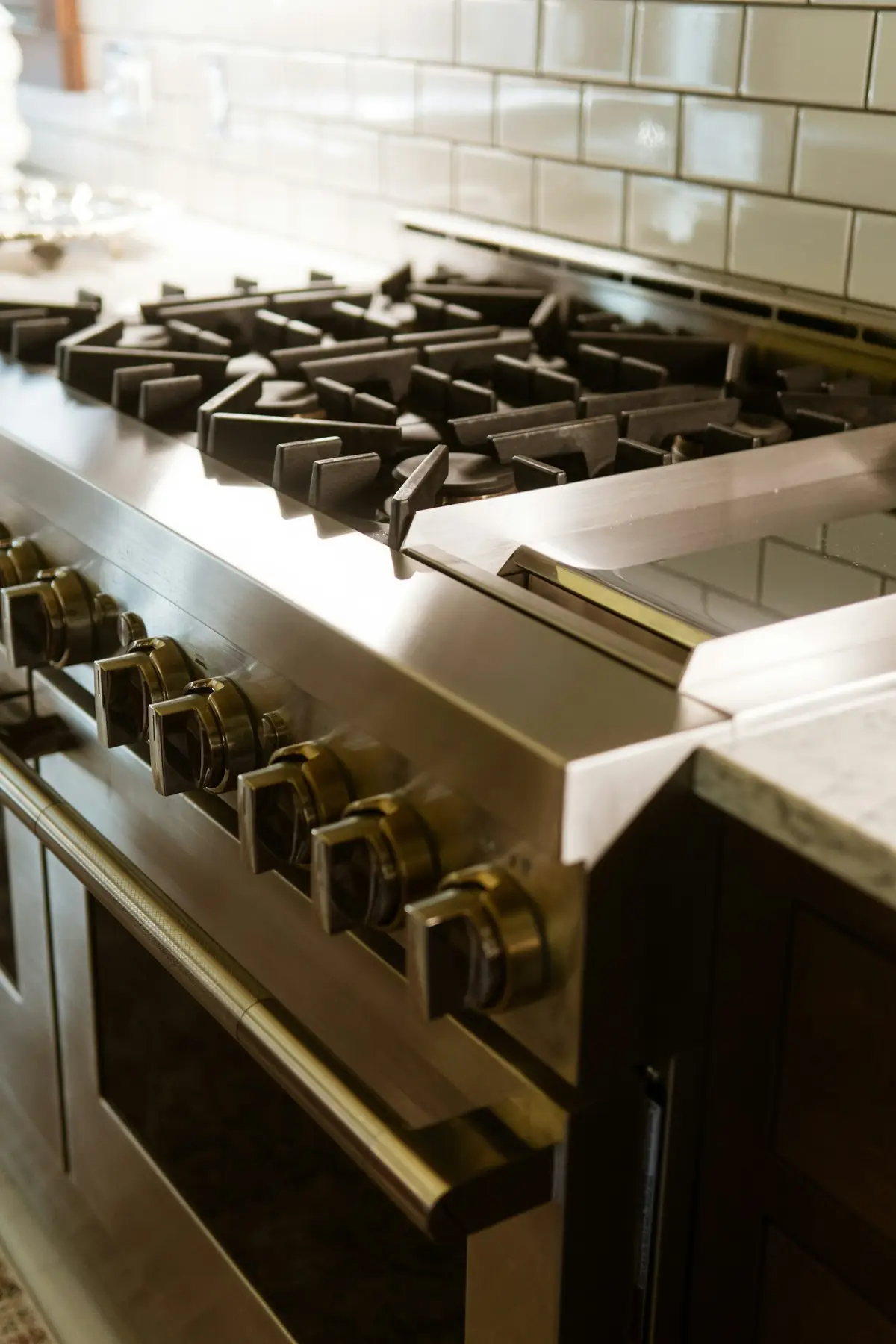
- Château ranges: the flagship line, which La Cornue says is handmade to order at its workshop in the Paris region. Château ranges are known for vaulted ovens, offered in gas or electric depending on the model, and for rangetops that can combine brass gas burners, a cast iron French top, a power burner, a gas lava-rock grill, an electric teppanyaki and induction.
- CornuFé ranges: described by La Cornue as the first step into the brand. CornuFé ranges are built as either a dual-fuel or an induction model, with a convection oven.
La Cornue also makes matching hoods, a rotisserie and a built-in oven. Our work centers on cooking: gas burners and ignition, French tops, vaulted gas and electric ovens, induction elements, thermostats, sensors and controls. If your question is about another La Cornue piece, ask when you call, and if it is not something we repair, we will say so up front.
If You Smell Gas Near Your Range
Many La Cornue configurations use gas burners, a gas French top or a gas oven. If you ever smell gas, do not touch light switches, plugs or the range controls. Get everyone outside, then call your gas utility or 911 from outside. Once the utility has made the home safe, we can diagnose what happened at the range.
Symptoms We Hear About, and What They Can Mean
A Burner Clicks but Will Not Light
Brass burners need clean ports and a properly seated cap to light evenly. Spills that have dried in the ports, a cap that has shifted, moisture left after cleaning, a worn igniter or a problem in the spark module can each keep a burner from catching. If one burner lights and its neighbor does not, the difference tells us where to start.
The French Top Heats More Slowly Than It Used To
A French top is a solid cast iron plate warmed by a single gas burner beneath it, with the strongest heat at the center and gentler zones toward the edges. It is meant to heat more gradually than an open burner. If it has become noticeably slower, or the center stays cool, the burner underneath, its gas supply or its ignition may need attention.
A Vaulted Oven Will Not Reach Temperature
On a gas oven, slow or absent heat can point to the igniter or a safety valve. On an electric oven, a heating element, a temperature sensor or a thermostat are the places to start. Because La Cornue builds its vaulted ovens in gas or electric versions, knowing which one you have shapes the whole diagnosis.
An Induction Zone Will Not Respond
Induction only works with cookware that a magnet sticks to, so try a different pan first. If a zone still ignores the pan or shows an error, the element, its power electronics or the controls may be the cause.
Knobs, Doors and Drawers
Stiff knobs, an oven door that no longer closes snugly and a worn door seal can all change how evenly a range cooks. They are smaller repairs, and they are worth doing on a range you plan to keep for years.